
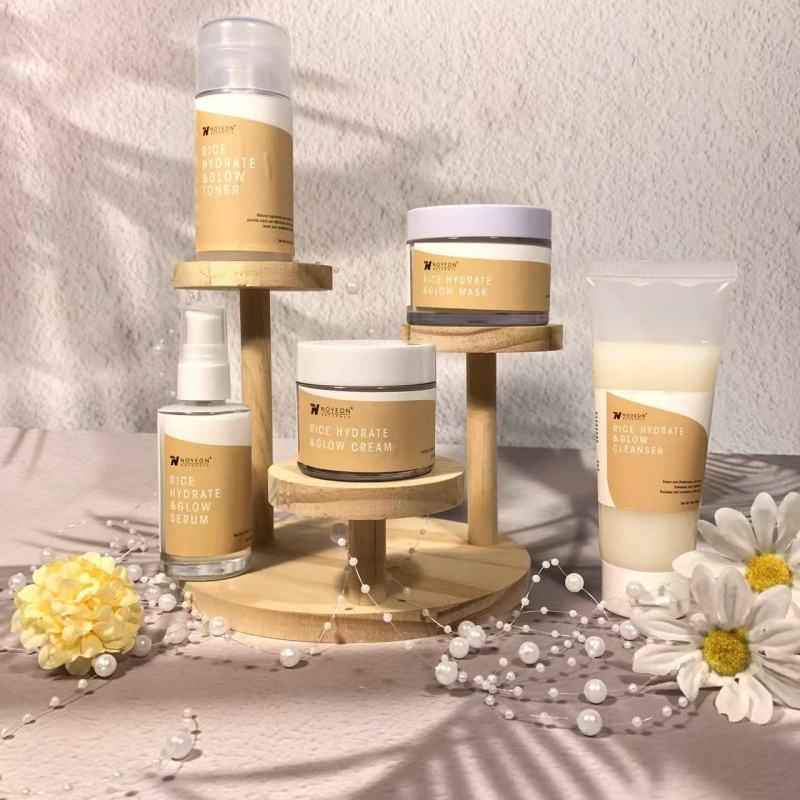
If you are building a beauty brand today, one of the biggest challenges is not marketing—it is manufacturing consistency, compliance, and speed to market. This is exactly why many global startups, Amazon sellers, salon brands, and retailers turn to Guangzhou OEM cosmetics factories as their core supply chain partner.
Guangzhou has quietly become one of the most powerful cosmetics manufacturing hubs in the world. Not just because of cost, but because it offers a complete ecosystem: formulation labs, packaging suppliers, fragrance houses, filling lines, testing labs, and export logistics—all within one region.
This article breaks down how a Guangzhou OEM cosmetics factory works, what services you can expect, pricing structures, product categories, real brand case studies, and how global beauty companies scale using this model.
1. Why Guangzhou Became a Global Cosmetics Manufacturing Hub
Guangzhou is not just a city of factories—it is a beauty supply chain cluster. Over the last 20 years, it has developed a full ecosystem that supports both mass production and niche private label innovation.
Key advantages of Guangzhou OEM ecosystem:
- Complete upstream + downstream supply chain
- Fast sampling (3–7 days)
- Low MOQ options for startups
- Advanced packaging innovation
- Strong export experience (US, EU, Middle East, SEA)
- Competitive labor + material costs
- Mature regulatory compliance (ISO, GMP, FDA export support)
Table 1: Guangzhou OEM Cosmetics Factory Ecosystem Overview
| Category | Function | Advantage |
|---|---|---|
| Formulation Labs | Product R&D | Custom skincare & makeup formulas |
| Packaging Factories | Bottles, jars, tubes | Fast mold development |
| Filling Lines | Production & assembly | High-speed scalable output |
| Raw Material Suppliers | Ingredients sourcing | Cost optimization |
| Testing Labs | Safety & compliance | Export certifications |
| Logistics Providers | Global shipping | Door-to-door export |
2. What a Guangzhou OEM Cosmetics Factory Actually Offers
A true OEM/ODM factory is not just a production site. It is a full-service brand builder.
There are typically 3 models:
- OEM (Original Equipment Manufacturing) → You provide formula
- ODM (Original Design Manufacturing) → Factory provides formula
- Private Label → Ready-made formulas, fast branding
Table 2: OEM vs ODM vs Private Label Comparison
| Model | Control Level | Cost | Speed | Best For |
|---|---|---|---|---|
| OEM | Very High | High | Medium | Established brands |
| ODM | Medium | Medium | Fast | Growing brands |
| Private Label | Low | Low | Very Fast | Amazon / startups |
3. Product Categories You Can Develop
Guangzhou factories cover almost every segment of the beauty industry.
Popular product categories:
- Facial skincare (serum, cream, toner)
- Body care (lotion, scrub, oil)
- Hair care (shampoo, conditioner, treatment)
- Makeup (foundation, lipstick, concealer)
- Sun protection (SPF cream, spray)
- Men’s grooming products
- Natural/organic skincare lines
Table 3: Top OEM Cosmetic Product Lines & Market Demand
| Product Type | Market Demand | Profit Margin | MOQ Level |
|---|---|---|---|
| Facial Serum | Very High | High | Medium |
| Sunscreen | Very High | High | Medium |
| Shampoo | High | Medium | High |
| Lipstick | High | High | Low |
| Body Lotion | Medium | Medium | Medium |
| Face Cleanser | High | Medium | Medium |
4. How the OEM Process Works (Step-by-Step)
Most overseas buyers misunderstand OEM as “just ordering products.” In reality, it is a structured production pipeline.
Typical workflow:
- Product idea discussion
- Formula selection or customization
- Sample development
- Packaging design
- Stability testing
- Bulk production
- Filling & assembly
- Quality inspection
- Export shipping
Table 4: OEM Cosmetics Production Timeline
| Stage | Time Required | Output |
|---|---|---|
| Product Concept | 1–3 days | Brief confirmation |
| Formula R&D | 3–10 days | Lab sample |
| Packaging Design | 5–15 days | Mockup & mold |
| Testing Phase | 7–20 days | Stability approval |
| Production | 10–30 days | Finished goods |
| Shipping | 5–25 days | Delivered inventory |
5. Cost Structure of Guangzhou OEM Cosmetics
Pricing depends heavily on formulation complexity, packaging, and order volume.
Key cost components:
- Raw materials (30–50%)
- Packaging (20–40%)
- Manufacturing (10–20%)
- Testing & certification (5–10%)
- Logistics (varies by region)
Table 5: Example Cost Breakdown (Private Label Serum)
| Cost Element | Estimated % | Notes |
|---|---|---|
| Ingredients | 35% | Active compounds |
| Packaging | 30% | Glass bottle + dropper |
| Production | 15% | Filling & assembly |
| Testing | 5% | Safety compliance |
| Logistics | 15% | Export shipping |
6. Real Business Case Studies (4 Examples)
Case Study 1: US Amazon Skincare Brand (0 → $1.2M/year)
A US Amazon seller launched a vitamin C serum using a Guangzhou ODM factory.
- Started with 500 units MOQ
- Used ready formula with custom packaging
- Focused on Amazon PPC marketing
Result:
- Reached $100K/month in 8 months
- Expanded into 6 SKUs within 1 year
Case Study 2: European Salon Brand Expansion
A salon chain in Germany wanted to create its own product line.
- Developed custom shampoo & treatment line
- Used OEM formulation for hair repair
- Added professional-grade branding
Result:
- Increased salon retail revenue by 35%
- Built recurring customer product sales channel
Case Study 3: Middle East Luxury Skincare Brand
A Dubai-based entrepreneur launched a luxury skincare line.
- Focus: anti-aging and gold-infused creams
- ODM formulation + premium packaging
- Heavy focus on branding and storytelling
Result:
- Products sold in 40+ retail stores
- Strong Instagram-driven growth
Case Study 4: Southeast Asia E-commerce Brand
A Singapore-based seller entered Shopee/Lazada beauty category.
- Private label body lotion + face wash
- Low MOQ (300 units per SKU)
- Fast product iteration cycle
Result:
- Achieved profitability in 60 days
- Expanded into 12 SKUs in 6 months
7. Why Global Brands Choose Guangzhou OEM Factories
There are 5 key reasons brands repeatedly return to Guangzhou:
1. Speed
New product launch can happen in under 30 days.
2. Flexibility
From 300 units to 300,000 units.
3. Innovation
Rapid trend adoption (snail mucin, peptides, niacinamide, etc.)
4. Cost efficiency
Significantly lower than US/EU manufacturing.
5. Full ecosystem
Everything from packaging to shipping in one place.
8. Common Mistakes New Brands Make
Many first-time buyers fail not because of manufacturing—but because of strategy mistakes:
- Choosing too many SKUs at launch
- Ignoring compliance rules in target market
- Over-investing in packaging instead of product quality
- Not testing samples properly
- Underestimating marketing cost
9. How to Choose the Right Guangzhou OEM Factory
Not all factories are equal. A good partner should have:
- GMP / ISO certifications
- Export experience (US/EU markets)
- In-house R&D team
- Packaging development capability
- Transparent MOQ and pricing
- Sample flexibility
10. Final Thoughts
A Guangzhou OEM cosmetics factory is not just a supplier—it is a scaling infrastructure for beauty brands.
Whether you are:
- Launching your first skincare brand
- Expanding an Amazon store
- Building a salon product line
- Or developing a luxury cosmetic brand
Guangzhou provides a complete system to go from idea → product → global market quickly and efficiently.
The winners in the beauty industry are no longer just marketers—they are the ones who control supply chain + speed + product iteration.
And that is exactly where Guangzhou OEM factories dominate.